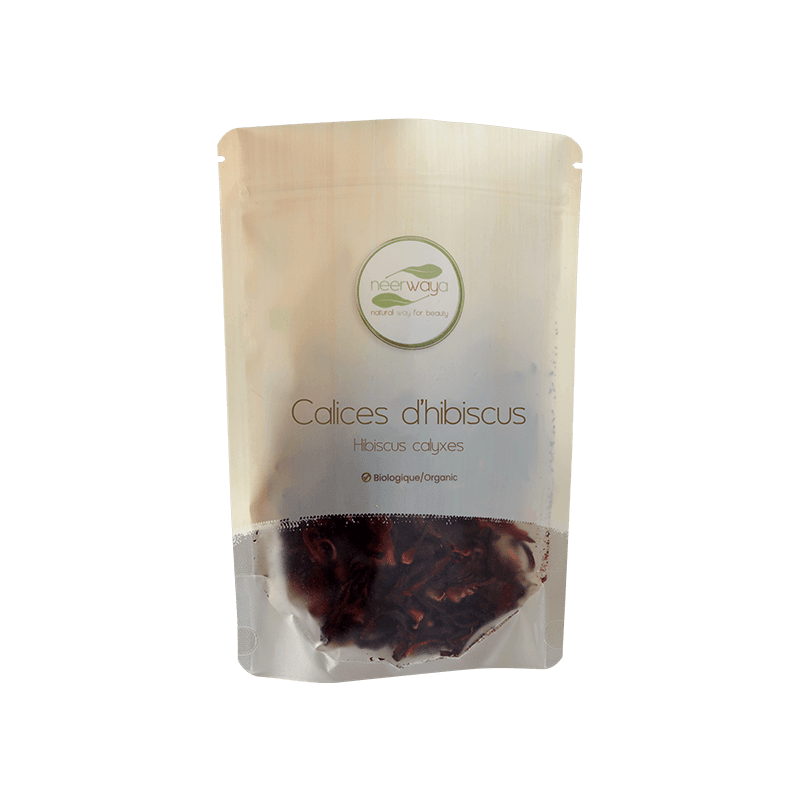


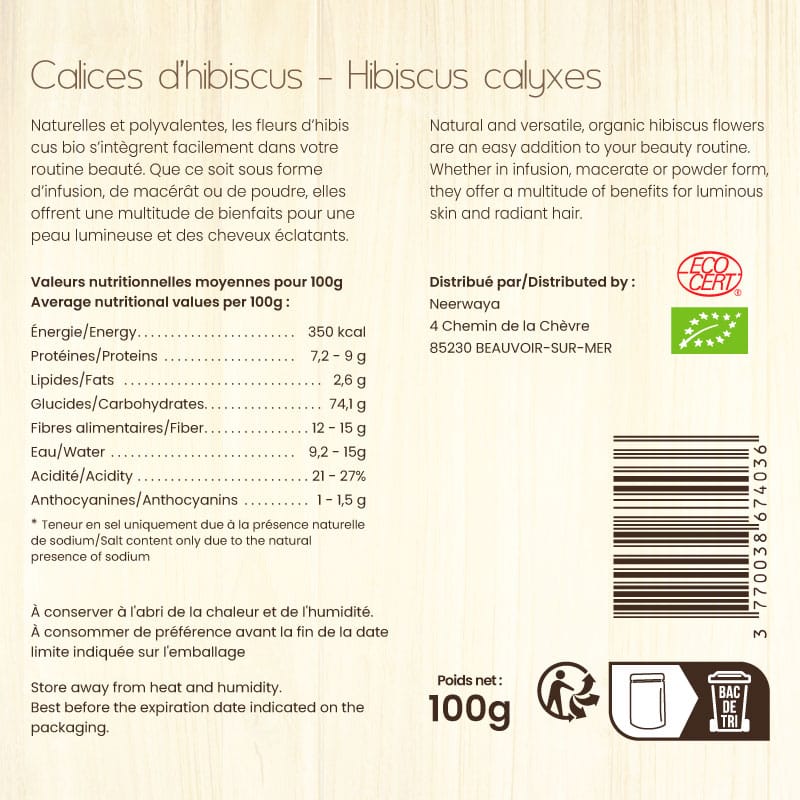
Organic hibiscus flowers
Dried calyces of Hibiscus sabdariffa, deep red, with a clean acidity.
Senegalese bissap, Egyptian karkade, a syrup, a dressing or poached pears: ten minutes of steeping is all it takes.
7,00 €
Out of stock
Notre site sera bientôt en ligne
Register your email address to be notified as soon as our products are available:
Adopt hibiscus flowers!
Organic hibiscus flowers: what you are buying is not a flower
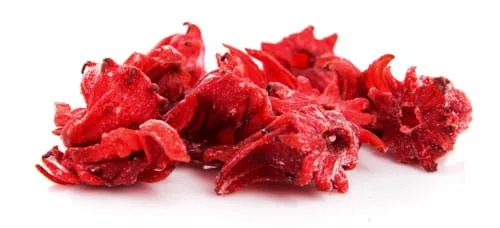
A universal misunderstanding to clear up first: these are neither flowers nor leaves. They are the calyces of Hibiscus sabdariffa — the fleshy envelope that surrounds the seed once the flower has dropped. The flower itself is pale yellow and of no culinary use. It is the calyx that reddens, thickens, and is picked by hand before being dried in the sun.
Bissap in Senegal and Burkina Faso, karkade in Egypt, zobo in Nigeria, agua de Jamaica in Mexico: the same plant, four continents, as many names.
Colour and acidity are two different matters
The red comes from anthocyanins, the same pigments as in blackcurrant, and it passes into water within minutes. The acidity comes from organic acids that keep on releasing long afterwards. That is why an over-long steeping turns harsh without turning redder: as soon as the colour is there, take the calyces out. Ten minutes is enough, fifteen at most.
How to choose, and what you will find in the bag
Good hibiscus comes as closed, supple calyces of a dark, almost purple red. A bright red powder at the bottom of the bag means broken, older calyces, which steep faster but give a more marked bitterness.
In the kitchen
- Bissap: 50 g per litre of water, cane sugar, a hint of vanilla or mint. Served very cold.
- Karkade: 40 g per litre, a cinnamon stick, hot or iced.
- Syrup: the infusion reduced with sugar keeps three weeks and turns sparkling water into something else.
- In savoury cooking: rehydrated and finely chopped, the calyces replace vinegar in a dressing or a tabbouleh.
- For dessert: our hibiscus-poached pears, deep garnet red without a gram of colouring.
And do not throw the calyces away after steeping: chopped, they are very good in a fruit salad.
Further reading: three refreshing hibiscus drinks.
A note on transparency
We do not show figures for this product: neither Ciqual nor the FAO West African reference documents the dried calyces of Hibiscus sabdariffa, and the composition varies considerably with cultivar and drying. We would rather not put forward anything we cannot establish. An analysis of our batch is under way.
Organic hibiscus flowers
Out of stock