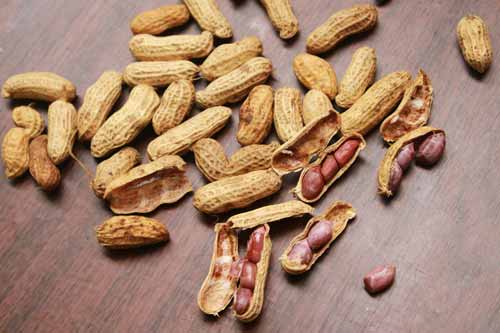
In Valencia, horchata is drunk standing up, ice cold, from a narrow glass, with a fartón to dip into it. It is barely known in France, which is a pity: it is the easiest plant milk to make yourself. No cooking, no knack, three ingredients — two of which are water and sugar.
It tastes like no other plant milk. Where almond is discreet and oat is cereal-like, tiger nut gives a drink that is frankly sweet with no added sugar, with a background of hazelnut and coconut. Children take to it immediately.
Tiger nut, from the people who sell it
The first thing to know, because it changes everything: the tiger nut is not a nut. It is a small tuber, the swollen root of a sedge — Cyperus esculentus. The French call it amande de terre, earth almond; the English name comes from the pale stripes running across its skin. That confusion has a practical consequence: anyone allergic to tree nuts has nothing to fear here, since tiger nut is not on the list of the fourteen allergens that must be declared.
The second thing: ours is dried, not roasted. Drying removes the water and concentrates the tuber’s natural sugar, which is what gives it that hard, almost woody texture straight from the bag. Roasted tiger nut would smell better but would give a brown, bitter horchata. For the drink, you want the dried kind.
Hence its hardness, and hence the step that governs the whole recipe: soaking is not optional. A dry tiger nut resists the blender; rehydrated for twenty-four hours, it crushes between two fingers and releases its starch. That starch is what gives horchata its body — the sense of drinking something nourishing rather than flavoured water.
Our tiger nuts come from West Africa, where they have been chewed raw for as long as anyone knows, long before Valencia turned them into a drink. Keep the bag closed and dry: two years, no trouble. Once soaked, they keep only two days in the fridge.
The ingredients
For 1 litre, about 4 tall glasses:
- 250 g organic tiger nuts
- 1 litre cold water, plus the soaking water to discard
- 40 g soft brown sugar, or less — taste first
- 1 pinch ground cinnamon
- 1 pinch salt
Optional: a strip of unwaxed lemon zest, as they do in Valencia.
The recipe, step by step
- Soak. Cover the tiger nuts generously with cold water and leave twenty-four hours in the fridge. They will double in volume. Twenty-four hours, not twelve: that is the difference between a creamy horchata and cloudy water.
- Drain and rinse. Throw away the soaking water. Rub the tiger nuts between your hands under running water to loosen the grit that sometimes sits in the folds of the skin.
- Blend with half the water. Tiger nuts and 500 g of water, full speed, two minutes without stopping. The mixture must turn white and opaque.
- Add the rest of the water and blend another thirty seconds.
- Strain. Pour into a nut milk bag, or a fine cloth stretched over a bowl, and press hard. You really have to twist: this is where the yield is won or lost.
- Sweeten and season. Sugar, cinnamon, salt, whisked in. Taste, adjust, then two hours in the fridge — lukewarm horchata is worth nothing.
The little extra
Do not throw away the pulp. Spread on a tray and dried for thirty minutes at 100 °C, it becomes a perfectly usable tiger nut flour for a cake or a granola. That is half your bag you were about to bin.
And serve the horchata very cold, never over ice: Valencians put it in the freezer until it starts to crystallise at the edges. Ice cubes dilute it and take away precisely what you came for.
What to swap
- The brown sugar → agave syrup or honey, reduced by a third. White sugar works but gives a flatter drink.
- The cinnamon → lemon zest alone, which is the most traditional version. Both together is already a lot.
- The soaking → nothing replaces it. Not hot water, not a more powerful blender. It is the one step you cannot cheat on.
Keeping and making ahead
In the fridge: 2 to 3 days in a closed bottle. It separates on standing, which is normal and not a fault: shake before serving.
In the freezer: it takes badly to being frozen in a bottle, but very well in an ice cube tray — and those horchata cubes are perfect for chilling the next batch without watering it down.
What can be done the day before: the soaking, obviously. Build it into your plans: a horchata decided on in the morning is drunk the next day.
Equipment
A blender, the most powerful you have, and above all a nut milk bag — the only purchase that really matters here. A fine cloth or a double layer of muslin will do; an ordinary sieve will not, as the mesh is too wide and you will end up with a gritty drink.
Nutrition
We do not show a table for this recipe, and here is why. Horchata is strained: a good half of the material leaves with the pulp. Calculating from the starting ingredients would mean counting what you threw away, and would give figures well above the truth. We would rather state nothing than state something false. The values will appear here the day we have a bottle analysed.
Frequently asked questions
My horchata is gritty, what can I do?
The strainer is at fault, not the blender. Pass it again through a nut milk bag or a fine cloth: an ordinary mesh sieve always lets particles through.
Can it be made without sugar?
Yes, and it stays sweet — tiger nut is naturally so. Taste before you sweeten; you may be surprised.
Why is mine beige rather than white?
Because you kept the skins on, which is a good thing. Industrial horchata is white because the tiger nuts are peeled. Yours will have more flavour.
Must the soaking water really be thrown away?
Yes. It picks up surface impurities and an earthy taste that would spoil the drink. Rinse before blending.
The products in this recipe
What to try next
- Crunchy tiger nut and fonio granola — where that dried pulp goes.
- Discover organic tiger nut — its history, from ancient Egypt onwards.
- Homemade cashew cream — the other plant base worth knowing.