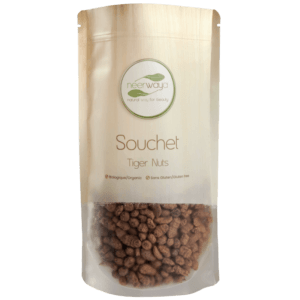
A thousand-year story: tiger nut, treasure of ancient Egypt
Tiger nut (Cyperus esculentus) is no newcomer. As early as 3000 BC, the Egyptians treated it as a food of choice. The wall paintings in the tomb of the vizier Rekhmire, under Amenhotep II, show craftsmen grinding tiger nut rhizomes into a coarse flour used for ritual cakes. Prized for its sweet almond flavour, it was also pressed into oil for ointments.
Today tiger nut is grown in West Africa (Niger, Burkina Faso) and in Spain (Valencia), where it is the star of horchata de chufa, a sweet, refreshing drink. Its return to the spotlight owes much to its gluten-free nature and its fibre content, which suit modern diets well. Fun fact: despite its name, the tiger nut is not a nut but a tuber — so it is not among the tree nuts on the allergen list.
Gluten-free and rich in fibre
A blessing for anyone avoiding gluten, whether out of necessity (coeliac disease) or by choice. Unlike conventional grains such as wheat, it is naturally gluten-free, which makes it a safe and tasty alternative.
But that is not all:
- Rich in fibre. Dried tiger nut provides 11.7 g of fibre per 100 g, nearly double the threshold that allows the wording “rich in fibre”. It is one of the most fibrous foods in our range.
- Mostly unsaturated fats. Its fat profile is close to that of olive oil.
- Plant protein. At close to 5 % protein, it brings essential amino acids, lysine among them, which is often in short supply in other grains.
Tip
Work tiger nut into your dishes for the fibre, without giving up on flavour!
One ingredient, many uses
Organic tiger nut is a chameleon in the kitchen. Its naturally sweet taste, somewhere between almond and coconut, makes it a star ingredient in sweet and savoury cooking alike. A few ways to adopt it:
- Tiger nut flour: perfect for gluten-free cakes, muffins or pancakes. It pairs well with starches such as tapioca for a light texture.
- Tiger nut milk (horchata): soak the tubers overnight, blend with water, strain, and enjoy a creamy drink — ideal in summer.
- Granola or muesli: tiger nut flakes replace oat flakes in gluten-free granolas, with yoghurt or plant milk.
- Ancient baking: take a leaf from the Egyptians and mix tiger nut flour with dates for rustic cakes.
Advice
Toast your organic tiger nuts lightly before using them to bring out their nutty flavour. Try them in a gluten-free cookie recipe for a rich result!
An ethical and sustainable choice
Our tiger nuts are grown in West Africa, in fields farmed with respect for the land. Tiger nut is a sustainable crop: it grows in poor soils, asks little water, and enriches the ground through its rhizomes. By choosing our organic tiger nut you support local farmers and pesticide-free farming, and you get a raw, unprocessed product.
Its long keeping qualities — up to two months in a cool place — make it a practical ally for a zero-waste kitchen. An idea: keep your tiger nuts in an airtight jar in the fridge to preserve their freshness and their crunch.
Why choose our organic tiger nuts?
Our tiger nuts are an invitation to rediscover an ancient food that suits modern needs. Gluten-free and rich in fibre, they slot easily into your diet, whether you are vegan, paleo, or simply curious about new flavours. Their West African origin and organic farming guarantee a quality we can stand behind, and a positive footprint.
Whether you are a seasoned gluten-free cook or a beginner looking for something new, organic tiger nut is ready to change your dishes. So — ready to fall for this overlooked treasure?
Let the tiger nut win you over
Organic tiger nut is far more than an ancient grain: it is a gluten-free tuber that brings together history, flavour and a genuine fibre content. From ancient Egypt to modern kitchens, it keeps surprising through its versatility. Whether you use it as flour, as milk or as a topping, it offers a cooking experience of its own — and a small gesture for the planet.
Curious to try it? Order our organic tiger nuts and get started. Do share your creations with us!